Frequently Asked Questions
Learn about automatic license plate reader (ALPR) surveillance, data retention policies, privacy concerns, and how ALPR systems are being used and mismanaged in Colorado.
Most Flock cameras are small gray or black boxes on thin poles, often with a solar panel on top. You'll see them at intersections, neighborhood entrances, and parking lot exits. EFF's interactive scene and DeFlock's identification guide have photos to help you spot them.
Sources
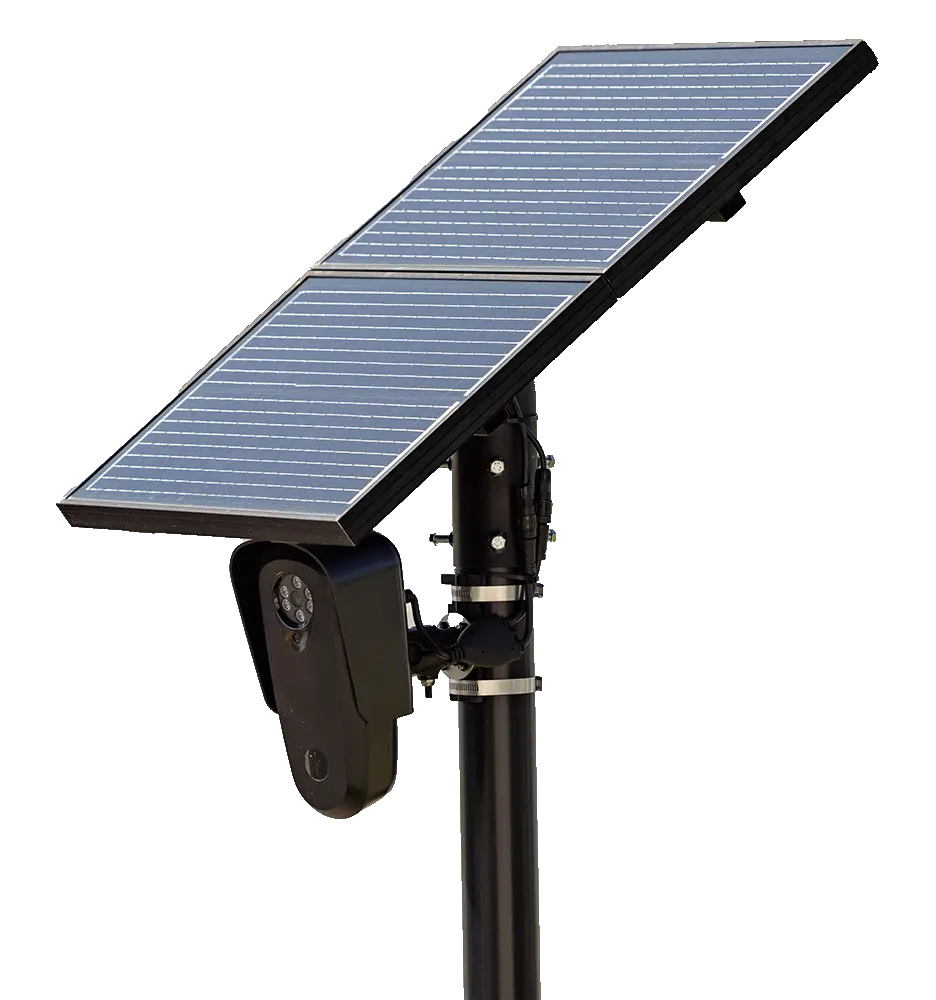
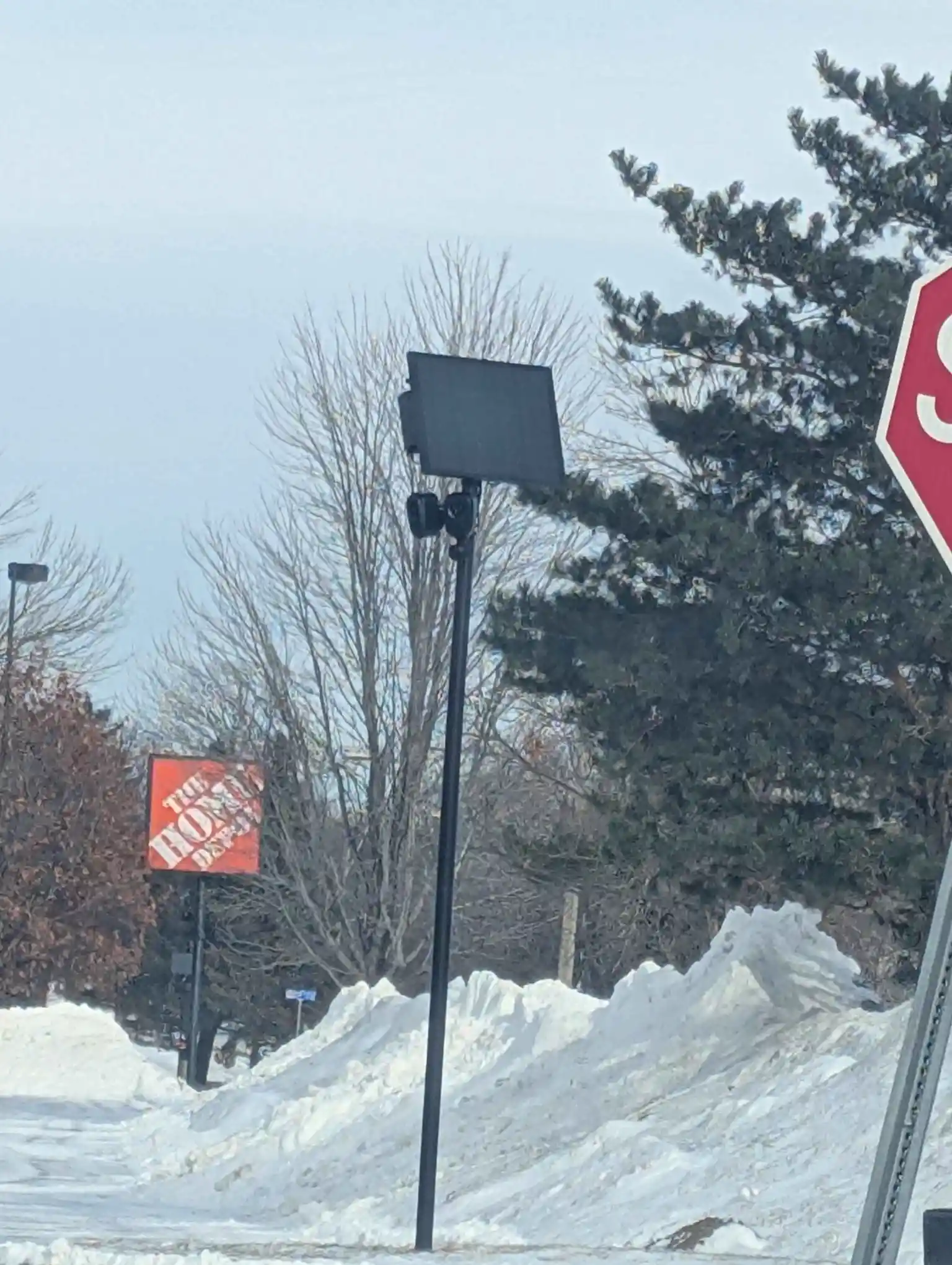
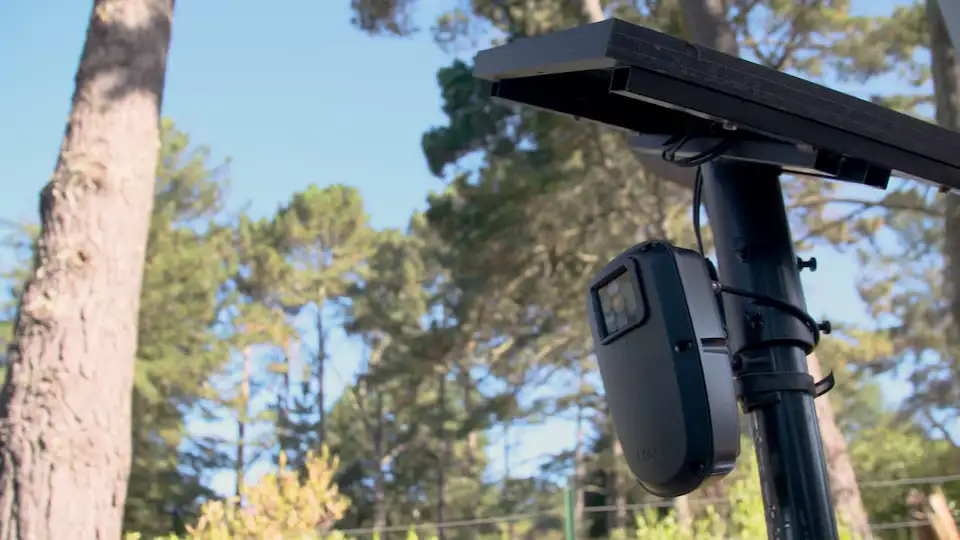
Older plate readers only checked for stolen cars. Newer networked systems track every car they see, share that data with hundreds of agencies, and allow searches by vehicle description. That's what we object to, whatever the vendor. Axon, Motorola, and others sell the same kind of system, so the questions about oversight, sharing, and retention don't change.
Sources
There's no official count. Volunteers have mapped 2,659 plate readers across Colorado on OpenStreetMap (August 2026), and the Colorado Sun counted 42 police departments with Flock contracts in April 2026. Nationally, Flock says it has more than 120,000 cameras in 49 states.
Sources
- Are You Flocked, Colorado (community records project), database updated 2026-08-07
- The Colorado Sun, As AI license plate readers spread across Colorado, grassroots movements push back (nonprofit), 2026-04-27
- Overpass Turbo, for querying OpenStreetMap yourself (query: surveillance:type=ALPR within Colorado)
- CNN, 2026-07-26 (mainstream)
- Reason, 2026-08-13 (libertarian)
No Colorado law mentions license plate readers by name. A few general laws apply: your plate counts as personal information, agencies and their vendors can't share it for federal immigration enforcement, and government surveillance records must be destroyed after three years. Everything else, including retention, sharing, and oversight, is up to your city's contract and council.
No. Senate Bill 26-070, the PEEPS Act, would have required a warrant for location data older than 72 hours, limited data retention to 30 days, and prohibited sharing with agencies outside Colorado. Senate Judiciary passed it 5-2 on February 23, and Senate Appropriations passed it 4-3 on April 21. The sponsors laid the bill over past the session's end on April 29 after the governor's office signaled a veto over the warrant provision. The official status is "Lost." Two other surveillance bills died that spring. SB26-071, the SAFE Act on law enforcement surveillance oversight, was postponed indefinitely 6-1. HB26-1037 would have banned government purchases of personal data from third parties, but it died 6-5 in House Judiciary. Both parties sponsored these bills. Opposition came from the governor's office, the Colorado Municipal League, police chiefs, sheriffs, and district attorneys. Sen. Judy Amabile says she plans to try again.
Sources
- SB26-070 bill page (Colorado General Assembly, primary)
- SB26-071 bill page (Colorado General Assembly, primary)
- HB26-1037 bill page (Colorado General Assembly, primary)
- Boulder Reporting Lab, Amabile pulls Colorado bill limiting Flock and other license plate readers (local nonprofit), 2026-04-30
- Complete Colorado, License plate reader bill clears Senate committee (Independence Institute, free-market), 2026-02-25
- Colorado Newsline, Colorado lawmakers kill bill to limit police use of Flock camera data (States Newsroom, progressive), 2026-04-29
- SB26-070 as amended by Senate Appropriations, bill text PDF (Colorado General Assembly, primary), 2026-04-21
State law sets the outer limit. Under C.R.S. 24-72-113, government custodians have free access to passive surveillance records for one year. In years two and three, they need a logged reason tied to a claim or incident to access the data, and the record must be destroyed after three years. Your city's contract sets the actual period, and it is shorter: every Colorado Flock portal we checked in August 2026 shows 30 days, and Denver's Axon contract uses 21. Flock's own recommended default dropped to 7 days on August 13, 2026 (see the question on that change below).
Sources
- Colorado Revised Statutes 2024, Title 24, section 24-72-113 (primary)
- Flock Safety, Flock updates privacy, accountability, security, and transparency safeguards (vendor), 2026-08-13
- CBS News Colorado, Denver City Council postpones vote on Axon contract (network news), 2026-03-11
- Flock Safety transparency portal, Boulder PD (vendor)
- Flock Safety transparency portal, Castle Rock PD (vendor)
Yes. C.R.S. 24-74-102(1) includes vehicle registration information, license plate numbers, and photographs or digitized images, alongside names, biometric data, and immigration status. A 2024 state ALPR brief describes plate reads as anonymous data, which does not match the statute's definition. In July 2025 the Attorney General sued a Mesa County deputy under the prohibitions built on this definition (C.R.S. 24-74-103 and 24-74-104) for relaying a driver's plate number and direction of travel to federal immigration officers.
No. In Chatrie v. United States, decided June 29, 2026, the Court held that police conduct a Fourth Amendment search when they use a geofence warrant to get cell phone location history from Google. The opinion does not mention license plate readers. Neither "license plate" nor "ALPR" appears in the majority, concurrences, or dissents. But the Court rejected two arguments cities often use: the third-party doctrine and the claim that a short window of location data is too small to matter.
Not so far in the cases we are tracking, and none has reached the appellate level. In Schmidt v. City of Norfolk, a federal judge ruled for the city on January 27, 2026, holding that warrantless use of Norfolk's 176 Flock cameras is not a Fourth Amendment search. The plaintiffs, represented by the Institute for Justice, appealed, and EFF, the ACLU, and the Cato Institute filed briefs supporting a reversal. In Colorado, Freeman and Steel v. City of Boulder, a class action filed May 27, 2026, argues that the city's cameras violate the state constitution. Boulder moved to dismiss on July 29, and as of August 24, 2026 there is no ruling.
Sources
- Schmidt v. City of Norfolk, district court opinion (E.D. Va., primary), 2026-01-27
- EFF, ACLU, and ACLU of Virginia amicus brief in Schmidt v. Norfolk (primary), 2026-04-20
- Cato Institute, Schmidt v. City of Norfolk amicus (libertarian)
- The Colorado Sun, Lawsuit says Boulder police Flock cameras are illegal surveillance (nonprofit), 2026-05-28
- Colorado Freedom of Information Coalition, Are Flock camera images of your own vehicle available under Colorado public records laws? (nonpartisan), 2026-08-12
- Institute for Justice, Norfolk case page (libertarian law firm)
So far, only car theft. A 2026 study of 216 agencies found car thefts fell 11% after cameras went in, with no change in other property crime. We haven't found a study showing less violent crime, and no Colorado city has published an analysis of its own program.
Sources
- Mourtgos and Adams, Automated license plate readers, vehicle theft, and clearance (CrimRxiv working paper, not peer-reviewed), 2026-08-16
- NIJ CrimeSolutions, License plate recognition technology as a crime deterrent (U.S. Department of Justice)
- Lum, Hibdon, Cave, Koper, and Merola, Journal of Experimental Criminology (peer-reviewed), 2011
- National Policing Institute, A multi-site evaluation of automated license plate readers (police research organization)
Not clearly. The vendor's marketing claims more than the studies show. The one study of a large fixed network's effect on investigations, in a single large city with nearly 100 readers, found that clearances for auto theft and robbery improved after installation but that the changes were not statistically significant in multivariate analyses. An August 2026 working paper found car theft clearances up 15.9 percent, though its authors note the trend began during the final three months before deployment, which weakens the causal link to the cameras. Recovery time improved by about a quarter of a day, and only for recoveries that were recorded. In July 2026, Cleveland's police department told its council that its case files are not kept in a way that would let anyone measure what one tool contributed.
This is an extrapolation. Flock's own page says, "Applying this framework to all of Flock's customers and estimating the totals, over 700,000 crimes each year are solved using Flock Safety technology." Flock employees wrote the underlying study, though two outside academics had an oversight role. Johnny Nhan of Texas Christian University was one of those academics. He told 404 Media that he "personally would have done things much differently" and stopped researching Flock because police data were too incomplete for meaningful analysis. Reason, a libertarian magazine, made the same criticism. The study counts cases where cameras "supported" or "contributed to" an investigation but does not show a marginal effect.
Sources
- Flock Safety, 10% of reported crime in the U.S. is solved using Flock technology (vendor), 2024-02-14
- 404 Media, Researcher who oversaw Flock surveillance study now has concerns about it (independent tech journalism), 2024-03-20
- Reason, Flock Safety's new privacy rules do little to ease concerns over ALPR surveillance (libertarian), 2026-08-14
It is a real study by two University of South Carolina professors, released as a preprint on August 16, 2026. Flock promoted it on August 24 and says on its own page that it did not fund the work but "provided the underlying deployment data that made the study possible." So it is not a Flock study, but the timing data came from Flock, and it has not yet been peer reviewed. The headline finding is an 11 percent drop in motor vehicle theft. Flock's promotion leaves out other findings from the same abstract: no distinguishable effect on other property crime, no violent crime finding, and no overall improvement in recovery time across all stolen vehicles. Flock's own page does note that car-theft arrests were already rising before deployment.
More often than the marketing suggests. An audit of the LAPD found 161 alerts in two months for cars that were no longer stolen, against 337 real recoveries, and officers used high-risk stop tactics in 46 of the 68 stops it reviewed. In Roseville, California, the software misread the plate in 71% of 1,427 alerts, though Flock blamed that city's camera setup. Flock's own figure is fewer than 9 human-reported errors per million alerts.
Sources
- LAPD Office of the Inspector General, review of the department's ALPR system, BPC #26-184 (government watchdog, primary), 2026-07-10
- Business Insider, Flock camera misread license plates in Roseville (mainstream), 2026-07-31
- Reason, She spent 7 months in legal hell after cops used Flock surveillance to identify the wrong car (libertarian), 2026-08-13
- Flock Safety, Flock updates privacy, accountability, security, and transparency safeguards (vendor), 2026-08-13
Yes. On September 27, 2025, a Columbine Valley police sergeant went to Chrisanna Elser's home in Denver with a summons. He accused her of stealing a $25 package from a doorstep in Bow Mar. The officer based this on Flock camera footage of her car and doorbell video. He told Elser he had "no doubt" she was responsible and refused to show her the video. Elser gathered her phone's location history, her own car's camera footage, and video placing her elsewhere. The charge was dropped. In November, the town stated the officer would face unspecified discipline. 404 Media later obtained the body camera footage. Complete Colorado, published by the free-market Independence Institute, reported two other cases in Boulder County where drivers were repeatedly stopped because a misread license plate put them on a hot list.
Sources
- The Colorado Sun, Flock camera, police, Colorado, Columbine Valley (nonprofit), 2025-10-28
- The Colorado Sun, Columbine Valley police officer faces disciplinary action (nonprofit), 2025-11-11
- 404 Media, Cop used Flock to wrongfully accuse a woman then refused to look at evidence that exonerated her, body camera shows (independent tech journalism), 2026-01-14
- CBS News Colorado, Flock cameras lead Colorado police to wrong suspect (network news), 2026-01-14
- Complete Colorado, Meaningful guardrails needed on Flock surveillance systems (Independence Institute, free-market), 2026-07-17
These flags can come from several places other than the camera. A data entry error can put your plate on a state or federal "attempt to locate" list. Your plate might be added to a camera hot list by mistake. Software can confuse similar characters, such as the O and 0 used in Colorado plates. Someone could be driving on a cloned plate that matches yours, or an out-of-state plate with the same characters might be mistaken for yours. The flag belongs to the agency that entered it, so contact that agency in writing. If that fails, a documented misidentification is evidence a council can act on. We have not found a published Colorado process for getting off a hot list.
Flock has no ICE contract. Its federal pilot programs ended in August 2025, and federal agencies are no longer in its statewide or national lookup networks. In June 2025, the company turned on automatic keyword blocks for immigration searches for agencies in Colorado and Illinois. Colorado law also prohibits city and county employees from making personal identifying information available "through a database or automated network" for federal immigration enforcement. Intentional violations carry penalties up to $50,000. These measures do not stop local or state agencies from running searches for federal agencies. An audit of the Columbus, Ohio system from November 2023 through June 2026 found that ICE ran zero searches. But Border Patrol and Homeland Security Investigations ran 3,962 searches, with 657 possibly related to immigration. This is why we use the term "federal immigration enforcement" instead of "ICE."
Sources
- Flock Safety, Does Flock share data with ICE? (vendor), revised 2026-07-24
- SB25-276 signed act, C.R.S. 24-74-103 and 24-74-107 (Colorado General Assembly, primary)
- WSYX / ABC6, Audit finds ICE ran zero searches on Columbus police Flock camera network (Sinclair, right-leaning), 2026-07-14
- 404 Media, Florida's wildlife cops are searching thousands of Flock cameras for ICE (independent tech journalism), 2026-04-06
- EFF, Are your local police using Flock Safety ALPRs to scan for immigrants? (digital rights, nonpartisan), 2026-06-25
Yes, historically. Denver Police Department audit logs, released under a public records request in July 2025, show police agencies across the country searched Denver-linked Flock data about 1,400 times for ICE or immigration purposes between June 2024 and April 2025. Two Colorado agencies appear in those logs with "ice" as the stated reason: Windsor Police Department had 2 searches on April 3, 2025, and Loveland Police Department had 26. We downloaded the spreadsheets and verified these rows. Denver removed its data from the Flock national lookup in spring 2025 and removed all Flock cameras on March 31, 2026.
Sources
- ACLU of Colorado, coalition statement on use of Flock cameras for ICE surveillance, with the audit log spreadsheets attached (civil liberties, left-leaning), 2025-08-11
- Denver ALPR network search audit log, file 4 (Denver Police Department record hosted by ACLU of Colorado, primary)
- The Colorado Sun / Gigafact, Have Denver's Flock cameras been used for immigration enforcement? (nonprofit), 2026-02-06
- The Colorado Sun, Senate Bill 70 and Colorado surveillance technology (nonprofit), 2026-04-21
City policies vary, and you can check them yourself. Flock publishes a transparency portal for many agencies. As of August 24, 2026, Boulder's portal listed 87 organizations with access to its data, all of them in Colorado. Arvada listed 72 organizations, all in Colorado. Windsor listed 808 organizations, including the FBI and the U.S. Postal Inspection Service; about 700 of those are outside Colorado. Castle Rock and Greeley do not publish a sharing list. Boulder shared data nationally until June 2025, and the ACLU of Colorado reports that U.S. Border Patrol searched Boulder's data more than 100 times before that ended. In March 2026, Flock wrote that some California agency networks were "inadvertently accessible to out-of-state law enforcement agencies for a period of time." In some cases, the company cannot determine why this happened.
Sources
- Flock Safety transparency portal, Boulder PD (vendor)
- Flock Safety transparency portal, Arvada PD (vendor)
- Flock Safety transparency portal, Windsor PD (vendor)
- ACLU of Colorado, Boulder is putting mass surveillance technology before civil liberties (civil liberties, left-leaning), 2026-08-12
- Flock Safety, Flock implements enhanced guardrails across California (vendor), 2026-03-02
The company has not been consistent. In July 2026, 404 Media showed that Flock's CEO told a local news outlet its plate readers do not do video, though the company had repeatedly announced that they can. InvestigateTV found training videos from Flock that describe people-tracking features the company publicly denies having. A former employee told 404 Media in August 2026 that he quit because "they lied." In March 2026, Flock wrote that some California camera networks were "inadvertently accessible to out-of-state law enforcement agencies" during 2025. The company added that "in some cases it is impossible to determine a specific cause." Flock has also published a detailed timeline of its federal data-sharing pilots and the resulting changes.
Sources
- 404 Media, Flock's CEO says its ALPRs don't do video after repeatedly announcing they can (independent tech journalism), 2026-07-23
- 404 Media, Why a Flock worker quit: 'They lied' (independent tech journalism), 2026-08-03
- ACLU, Flock Safety credibility lost as it repeatedly lies to city councils, police departments, and public (civil liberties, left-leaning), 2026-07-02
- Flock Safety, Flock implements enhanced guardrails across California (vendor), 2026-03-02
- Flock Safety, Does Flock share data with ICE? (vendor), revised 2026-07-24
Not in the Colorado cases we have tracked. Cities that drop Flock often replace the cameras with Axon license plate readers, and sometimes install more than they had before. Denver replaced about 110 Flock cameras with 50 Axon cameras, and Longmont made a similar swap to 15 Axon units. Douglas County's replacement runs the other direction: the Sheriff's 50 Flock cameras become 100 Axon cameras plus a countywide drone program. Fort Collins is the exception: its council canceled the program and had the cameras removed rather than replacing them (details in the city list below).
Sources
- 404 Media, Cities are ditching Flock, immediately replacing it with Axon license plate readers (independent tech journalism), 2026-08-06
- KUNC, Fort Collins drops Flock surveillance, directs data collection to stop and cameras to be removed (public radio), 2026-06-19
- Denver Gazette, Douglas County to replace Flock cameras with $22.8 million Axon system (Clarity Media), 2026-07-15
- Longmont Times-Call, Longmont moves ahead with Axon license plate reader system, 2026-03-25
- Yellow Scene, Longmont under the lens as council shapes surveillance future (local magazine), 2026-06-19
Denver's Axon contract reduced retention from 30 days to 21, gave the city ownership of the data, and opted out of data sharing. It also states that federal agencies or federal officers cannot access the data. Javier Mabrey, a state representative whose district covers southwest Denver, argued the other way in a signed Westword opinion column: Axon, he wrote, has deeper federal ties than Flock, citing Axon's $370 million Customs and Border Protection contract and a $21.5 million ICE contract for other products. Flock's CEO told NPR the same thing about Axon. Axon's camera also includes a second sensor for live video streaming, which Flock's did not have. DeFlock's founder said of Boulder's vendor search that "it's going to another company for the same product," and that the switch "fixes the irresponsible aspect, but it doesn't fix the privacy issue."
Sources
- Colorado Politics, Denver ends contract with license plate camera vendor Flock (Clarity Media), 2026-02-24
- Westword, opinion by state Rep. Javier Mabrey: Denver already rejected one surveillance company (alt-weekly, left-leaning; opinion), 2026-03-30
- NPR, Flock fallout: competitors see opportunity (public radio), 2026-08-22
- Boulder Reporting Lab, Boulder opens bidding process for license plate reader cameras amid Flock backlash (local nonprofit), 2026-03-13
As of August 24, 2026: Fort Collins (council vote 6-1 on June 16, all 15 cameras removed); Denver (non-renewal announced February 24, cameras removed March 31, replaced with Axon); Longmont (non-renewal December 2025, moved to Axon March 24); the Douglas County Sheriff's Office (switching to Axon, effective January 1, 2027); Louisville (cameras deactivated September 2025); and Salida (contract ended August 2026). Boulder's vendor search is paused and its Flock arrangement is month to month. Castle Rock's council has asked staff for a comparison of Flock's data policies against competitors. Avon's council has taken public comment at two meetings with no vote yet.
Sources
- KUNC, Fort Collins drops Flock surveillance (public radio), 2026-06-19
- The Colorado Sun, Senate Bill 70 and Colorado surveillance technology (nonprofit), 2026-04-21
- Axios Douglas County, Douglas County sheriff drops Flock for Axon (centrist), 2026-07-23
- KJCT8, Salida Police Department cancels contract with Flock Safety (Gray Media, local TV), 2026-08-13
- Daily Camera, Boulder Flock camera contract (local daily), 2026-08-20
- Colorado Politics, Castle Rock to review use of Flock license plate readers (Clarity Media), 2026-07-22
- Vail Daily, Avon receives more comment on Flock cameras (local daily), 2026-08-12
Colorado has two records laws, and ALPR material falls under both. The city holds contracts, invoices, procurement records, retention policies, and council materials. These are ordinary Colorado Open Records Act records, and the default is disclosure. Plate reads and search logs held by a police department are criminal justice records under the Colorado Criminal Justice Records Act (CCJRA). In those cases, the custodian can withhold anything not considered "official action" if they decide disclosure is "contrary to the public interest." A court reviews that decision only for abuse of discretion. Ask the city clerk for the contract and the policy under CORA. The police department may refuse the data itself. The Colorado Freedom of Information Coalition provides a tip sheet on criminal justice records and a request template. Copy fees are capped at 25 cents per page.
This issue is unresolved in Colorado and is being litigated. A Boulder resident's request for images of his own vehicle was refused. The city's motion to dismiss argues that the Colorado Criminal Justice Records Act "does not require custodians to generate a record for release" and that its Flock contract "did not purport to transfer ownership of Flock data to Boulder as against the rest of the world." These questions are central to Freeman and Steel v. City of Boulder, filed May 27, 2026. A Washington state judge ruled in 2025 that Flock images are public records, but that was based on a different statute. The ACLU argues that access logs should be public while un-redacted plate data should remain private to prevent stalking.
Sources
- Colorado Freedom of Information Coalition, Are Flock camera images of your own vehicle available under Colorado public records laws? (nonpartisan), 2026-08-12
- The Colorado Sun, Lawsuit says Boulder police Flock cameras are illegal surveillance (nonprofit), 2026-05-28
- ACLU, License plate readings shouldn't be public data (civil liberties, left-leaning), 2026
Not automatically. Flock's August 13, 2026 announcement says, "Existing customers will keep their current, democratically approved retention periods." Your council must decide whether to adopt it. Five days after the announcement, Boulder and Lafayette were still at 30 days. Other changes in the announcement are mandatory. By the end of 2026, every law enforcement account must have anomaly detection and every search must include case codes. All logins will require multi-factor authentication. EFF views the retention change as an optional default rather than a cap, noting that Flock has charged customers to extend retention in the past. If you want one specific request for your council, ask them to adopt the vendor's recommended 7 days.
Sources
- Flock Safety, Flock updates privacy, accountability, security, and transparency safeguards (vendor), 2026-08-13
- EFF, Too little, too late: Flock admits their technology needs reforms (digital rights, nonpartisan), 2026-08-13
- Kim Monson Newsroom, Boulder, Lafayette keep 30-day retention after Flock's 7-day default (conservative), 2026-08-18
- City of Boulder, Flock Safety cameras and Boulder Police Department (primary)
Neither. The Institute for Justice, a libertarian law firm, and the ACLU filed on the same side in the Norfolk appeal, and both called Flock's August 2026 reforms inadequate within a day of each other. The ACLU's surveillance lawyer told the conservative Washington Times that "opposition to government surveillance is nonpartisan." In Colorado, SB26-070 was sponsored by a Democrat and a Republican, and Rocky Mountain Gun Owners and immigrant rights groups both backed it. The Atlantic, a center-left magazine, published a defense of the cameras this year, and the essay describes Flock as "a fixation of the populist right." Conservative privacy advocates in Colorado, including the Ralston Valley Coalition, have argued that the problem is the technology itself rather than any one vendor, and Complete Colorado has run pieces on both sides.
Sources
- Washington Times, Flock public backlash explodes over mass surveillance cameras (conservative), 2026-07-02
- ACLU, Despite new updates, Flock's cameras remain a major civil liberties threat (civil liberties, left-leaning), 2026-08-13
- Reason, Flock Safety's new privacy rules do little to ease concerns over ALPR surveillance (libertarian), 2026-08-14
- The Atlantic, In defense of Flock (center-left magazine), 2026-08-10
- Kim Monson Newsroom, Denver postpones surveillance camera vote as unusual left-right coalition grows (conservative), 2026-03-25
- The Colorado Sun, 2026-04-21 (nonprofit)
Flock's transparency portals (one page per agency) list camera counts, retention, and 30-day usage for many Colorado departments. DeFlock's map plots crowd-mapped camera locations, and its Network view shows which agencies share data with which. Are You Flocked lists what is and is not publicly verified for each Colorado agency, and EFF's Atlas of Surveillance lets you look up your agency by name. To report a camera you have spotted, use the DeFlock app or edit OpenStreetMap directly; the data lives there under an open license. Contracts and policies are not in any of these tools; those come from a records request (see the question on records above).
Yes, for a time. On May 5, 2025, Denver City Council unanimously rejected an extension of the city's Flock contract. On July 7, 2025, Mayor Mike Johnston signed a $498,500 extension anyway; the amount sat just under the threshold that requires council approval, and the extension ran through October 2025. He extended the contract again in October over the council's objections, and a council committee pressed for a fuller review. On February 24, 2026, the city announced it would not renew. The Flock cameras came down on March 31, 2026, and the same day the council approved, 7-6, a one-year $150,000 contract with Axon for 50 cameras, with a shorter retention period and no national database for other agencies to search.
Sources
- ACLU of Colorado, coalition release on Flock searches (advocacy, left-leaning), 2025-08-11
- Colorado Politics, Denver rejects contract on license plate reader cameras (Clarity Media), 2025-05-06
- Colorado Politics, Denver mayor extends Flock camera contract against council's wishes (Clarity Media), 2025-10-22
- Colorado Politics, Council panel insists on more robust discussion on Denver's Flock dealings (Clarity Media), 2025-10-29
- Kim Monson Newsroom, Denver postpones surveillance camera vote as unusual left-right coalition grows (conservative), 2026-03-25
- The Denver Post, Denver ends Flock contract, moves to Axon (mainstream), 2026-02-24
- Colorado Politics, Denver Council narrowly approves deal with Axon (Clarity Media), 2026-03-31